Monitoring JUNOSW + Opticks : GPU ray trace accelerated optical photon simulation
Monitoring JUNOSW + Opticks : GPU ray trace accelerated optical photon simulation
Open source, https://github.com/simoncblyth/opticks
Simon C Blyth, IHEP — JUNO Collaboration Meeting, IHEP, Beijing — (21 July 2026)
Outline

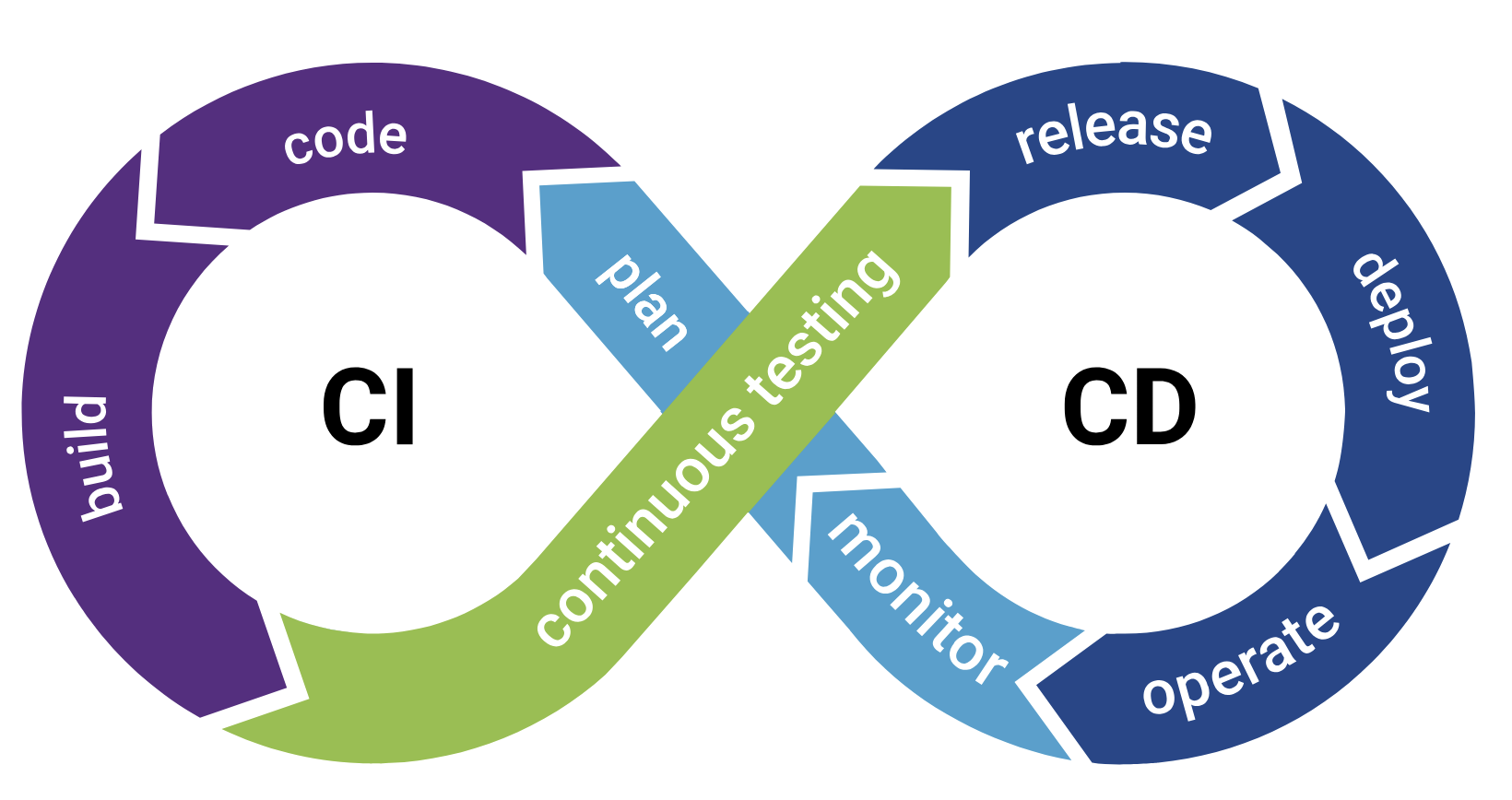
- [p2] OJ : Opticks+JUNOSW Automated Gitlab-CI/CD Releases
- [p3] Optical Photon Simulation Context
- (JUNO) Optical Photon Simulation Problem...
- Four NVIDIA RTX Gen : Ray Tracing : ~2x every ~2 yrs
- NVIDIA OptiX : Ray Tracing Engine -- Accessible GPU Ray Tracing
- Geant4 + Opticks + NVIDIA OptiX : Hybrid Workflow
- Amdahl 'Law' : Overall Speedup S(p,n) for Parallel Fraction p and Parallized Speedup n
- [p8] Opticks + JUNOSW (OJ) : Testing as Geometry and Models continue to Evolve
- Opticks+JUNOSW Monitoring
- gitlab-ci in OJ repository
- Opticks Grafana Dashboard
- Goal of Monitoring
- [p13] Preparations for Three Species LS model
- MC Method : Sampling using Cumulative Distribution Function (CDF)
- Generation of scintillator wavelengths on device using GPU texture
- Scint wavelength generation in triplicate (LAB, bisMSB, PPO)
- One billion wavelengths Chi2 check
- Status of Three Species LS model Preparations
- [p21] Opticks Updates for CUDA 13.1 OptiX 9.1
- [p22] Geant4 + Opticks + NVIDIA OptiX : Production Scaling ?
- Geant4 + Opticks + NVIDIA OptiX : Monolith x4, x16
- OpticksClients + OpticksService : Share GPUs
- Opticks "Optical Core" => Server, "Periphery" => Client
- NP_CURL.h : Array transport via HTTP POST
- Opticks Server Prototype : python + FastAPI + nanobind + CSGOptiX
- NVIDIA Triton Inference Server (aka Dynamo-Triton)
- [p31] Summary + Links
OJ : Opticks+JUNOSW Automated Gitlab-CI/CD Releases
Everyday ~17:15 non-GPU gitlab-runners:
- OJ : build + geometry conversion test
- release -> /cvmfs/opticks.ihep.ac.cn/oj/
Non-GPU runners limit testing
1st build after Opticks release eg Opticks-v0.6.6
- -> dated OJ "reference" release
> realpath /cvmfs/opticks.ihep.ac.cn/oj/releases/LatestRelease/el9_amd64_gcc11/LastRef/envset.sh
/cvmfs/opticks.ihep.ac.cn/oj/releases/J26.1.1_Opticks-v0.6.6/el9_amd64_gcc11/2026_06_22/envset.sh
To use "LastRef" OJ release (from machine with GPU):
source /cvmfs/opticks.ihep.ac.cn/oj/releases/LatestRelease/el9_amd64_gcc11/LastRef/envset.sh
tut_detsim.py ...
(JUNO) Optical Photon Simulation Problem...
Opticks solves this using GPU ray tracing via NVIDIA OptiX
Four NVIDIA RTX Gen : Ray Tracing : ~2x every ~2 yrs
| Gen |
Model |
Year |
VRAM |
CUDA
Cores |
RT (Ray tracing) |
|---|
| GB |
GB/s |
Cores |
TFLOPS |
Rise |
|---|
| Turing |
Quadro RTX 6000 |
2018 |
24 |
672 |
4,608 |
72 |
~34 |
[1] |
| Ampere |
RTX A6000 |
2020 |
48 |
768 |
10,752 |
84 |
~76 |
2.2x |
| Ada |
RTX 6000 Ada |
2023 |
48 |
960 |
18,176 |
142 |
~211 |
2.7x |
| Blackwell |
RTX PRO 6000 |
2025 |
96 |
1792 |
24,064 |
188 |
~380 |
1.8x |
- RT Cores: fixed-function ASICs dedicated to ray tracing : bbox intersection, ray-triangle intersection, BVH traversal, ...
NVIDIA RT TFLOPS: synthetic ray trace metric -- Turing -> Blackwell : 11x
(Equivalent FLOPs per Ray Intersection) x (Intersections per clock) x (Core Clock) x (Number of RT Cores)
[1] baseline : 2018 "World's First Ray-Tracing GPU -- 10 Gigarays/sec"
NVIDIA® OptiX™ Ray Tracing Engine -- Accessible GPU Ray Tracing
OptiX makes GPU ray tracing accessible
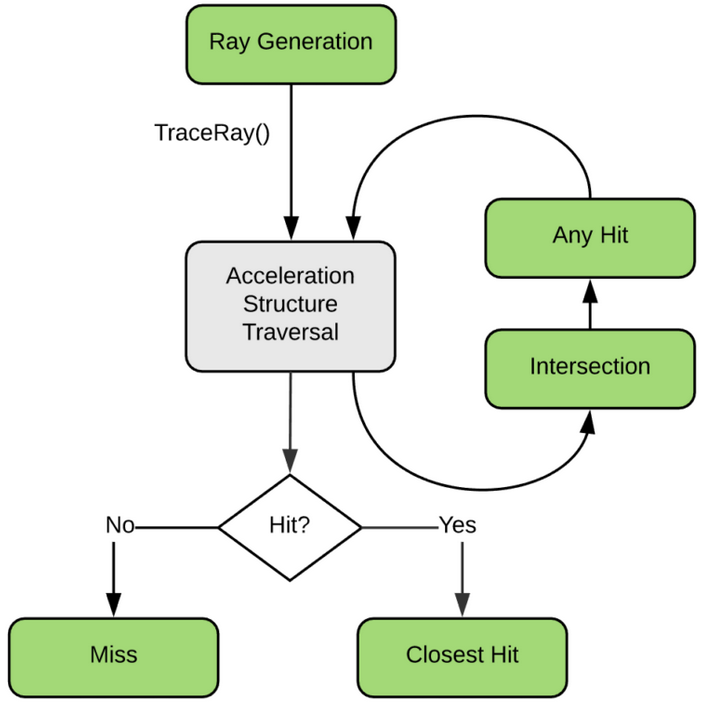
- Programmable GPU-accelerated Ray-Tracing Pipeline
- Single-ray shader programming model using CUDA
- ray tracing acceleration using RT Cores (RTX GPUs)
- "...free to use within any application..."
OptiX features
- stateless, multi-threaded and asynchronous
- built-in triangles, user-defined custom primitives
- acceleration structure creation + traversal (eg BVH)
- instanced geometry + acceleration structures
- compiler optimized for GPU ray tracing
User provides (Green):
- ray generation, geometry bounding boxes
- custom primitive intersect functions
- instance transforms
Latest Release : NVIDIA® OptiX™ 9.1.0 (Dec 2025)
- NVIDIA R590+ driver
- OptiX 6 support removed from drivers R590+
Geant4 + Opticks + NVIDIA OptiX : Hybrid Workflow
Opticks enables Geant4 based simulation to offload optical photon simulation to the GPU
NVIDIA GPU ray tracing of billions[1] of rays per second applied to optical simulation
[1] Actual performance depends on geometry and its modelling, JUNO optical simulation speedups > 1000x Geant4 have been measured
amdahl300
Opticks+JUNOSW (OJ) Monitoring
Opticks : fast replacement for Geant4 optical sim, BUT FRAGILE:
- model/geometry change often needs CUDA development
- eg: new three species LS model with state transitions
- any change can break correctness + performance
- => REQUIRES CONTINUOUS MONITORING
Accelerate dev-cycle via automated : Validation + Performance Mon.
OJ + Opticks Monitoring : https://code.ihep.ac.cn/blyth/oj/
- gitlab-ci nightly tests - (gitlab-ci coordination, Grafana presentation)
- GPU Workstation: gitlab-runner + Grafana server
- Opticks: summarize test performance/status into SQLite3 DB tables
- visualize using Grafana Dashboard
- interactive plotting via SQL queries => dynamic plots
"Pipeline" works, NEXT: extend coverage to all important tests
opticks_monitoring_gitlab_ci_20260716_141838.png
opticks_monitoring_grafana_20260715_160444.png
- Opticks Grafana Dashboard
- 1. interactive time window
- 2. direct links from gitlab-ci
opticks_monitoring_grafana_20260715_155458.png
- Web Interface -> Edit Grafana viz of "cxs_min.sh" - GPU time vs photon
- Viz based on SQL queries from SQLite3 DB tables
- Grafana very popular => AI very helpful
Opticks+JUNOSW (OJ) Monitoring : Goal
Nightly : DETAILED Validation + Performance Monitoring
Requires, for all important tests:
- expand DB schema to hold summary results
- tables : ~/opticks/sysrap/sreportdb.sql
- add reporting stage that writes summary results into DB tables
- python OR C++ using ~/np/NSQLite.h
- insert into tables : ~/opticks/sysrap/sreportdb.h
- control script : ~/opticks/sysrap/tests/sreportdb.sh
- add Grafana visualization of results + alerts for deviations
- use web interface to develop SQL query + configure viz
- currently cxs_min.sh added to develop the "pipeline"
- straightforward to incorporate more tests
- trying json "metadata" field - to avoid too many schema changes
- sqlite3 : json_extract(metadata, '$.photon_counts.total')
Preparations for Three Species LS model
Preparations for Three Species LS model
- MC Method : Sampling using Cumulative Distribution Function (CDF)
- Generation of scintillator wavelengths on device using GPU texture
- Scint wavelength generation in triplicate (LAB, bisMSB, PPO)
- One billion wavelengths Chi2 check
- Status of Three Species LS model Preparations
MC Method : Sampling using Cumulative Distribution Function (CDF)
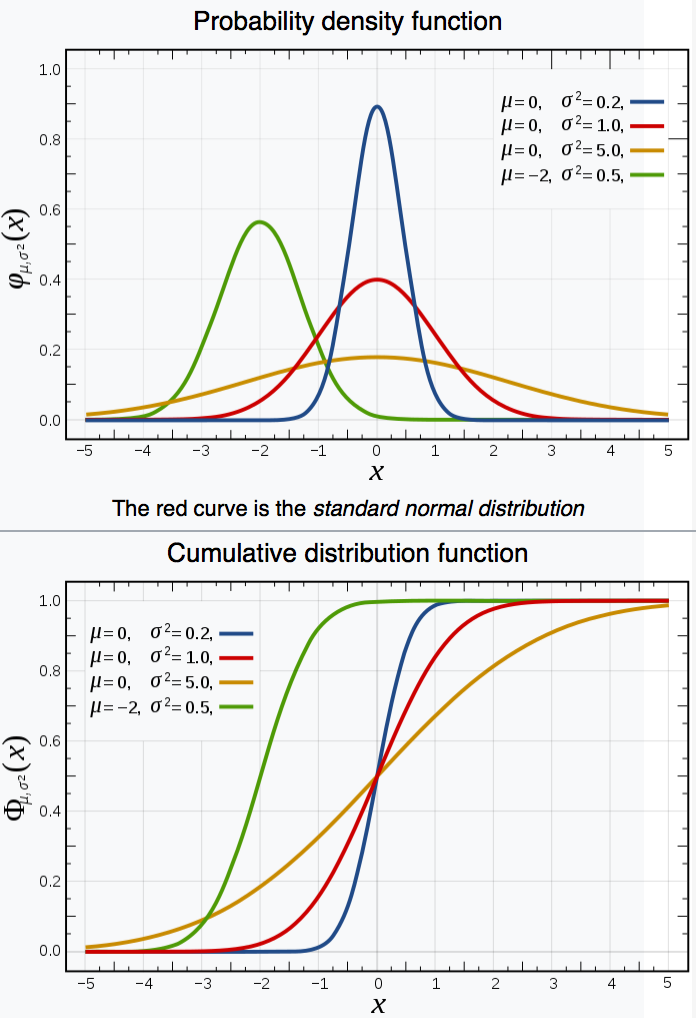
Aim : create sample (a set of values) that follows an analytic PDF
Cumulative distribution function (CDF) : Prob( X < x)
- definite integral PDF f -> CDF F
- F(b) - F(a) = P( a < X <= b ) = Integral a->b f(x) dx
- monotonically increasing function, CDF(-inf) = 0, CDF(inf) = 1
Map uniform randoms onto probabilities
- integrate PDF -> CDF (mapping PDF domain onto probability [0,1] )
- invert the CDF, so domain becomes [0,1]
- inverted_CDF(uniform random) -> sample value
Intuitively : throw randoms uniformly "vertically"
- Sigmoid CDF : low probability close to zero or 1 corresponding to tails
- greater probability in high PDF areas
- extreme case of delta-function PDF : all probability at one value
- sigmoid CDF becomes Heaviside step-function
CDF "encodes" shape of PDF in convenient form for sampling
https://en.wikipedia.org/wiki/Inverse_transform_sampling
Generation of scintillator wavelengths on device using GPU texture
- GPU texture
- 1D/2D/3D data structure with highly optimized lookup
using dedicated GPU hardware : Texture Mapping Units (TMUs)
- Layered GPU texture (aka texture array or "atlas")
- Single data structure holding multiple 1D/2D arrays, where
layers are accessed with integer index
Current Opticks Scintillation model
- fraction of absorbed photons "reincarnated" in same thread
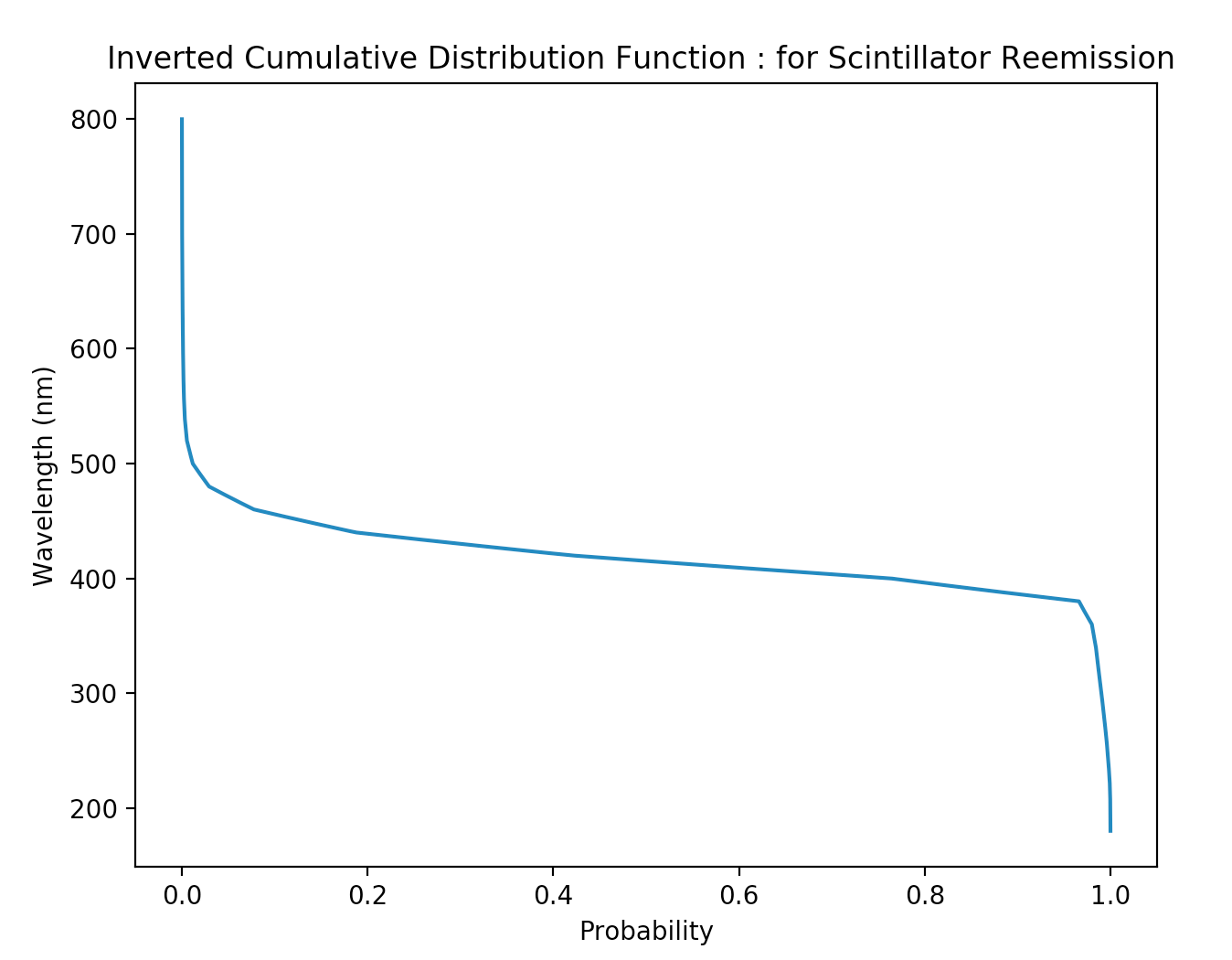
- encode inverted CDF ICDF into (cudaTextureObject_t)scint_tex
- uniform random lookups into scint_tex => wavelengths from distrib
float u_reemit_prob = curand_uniform(&rng);  // pseudo-code
if (u_reemit_prob < reemit_prob ) {
    float u_wavelength = curand_uniform(&rng);
    p.wavelength = tex2D(scint_tex, u_wavelength, 0.5f );    # (cudaTextureObject_t)scint_tex lookup
    s.flag = BULK_REEMIT ;
    return CONTINUE;
} else {
    s.flag = BULK_ABSORB ;
    return BREAK;
}
https://github.com/simoncblyth/opticks/blob/master/qudarap/qscint.h
Scint wavelength generation in triplicate (LAB, bisMSB, PPO)
| U4ScintThree.h |
Geant4 : ScintIntegral::GetEnergy -> ICDF |
| QTexLayered.h |
CUDA layered texture from array (layers, height, width, payload ) |
| qscint_three.h |
wavelength_hd20 tex atlas lookup with random u0 -> wl |
| QScintThree.h |
- Scint ICDF texture atlas 3*3 layers (3 species, 3 zone LHS/MID/RHS)
- initialize qscint_three.h on CPU, upload to GPU
|
0        e-m   e   e+m  ["HD20": e=.05,m=e/10]   -e-m 1-e 1-e+m        1
|         |    |    |                             |    |    |          |
+---LHS-------------+                             +----------RHS-------+
|         +----:----------------MID--------------------:----+          |
|              :    |        1 - 2*(e-m)          |    :               |
|              :    |                             |    :               |
|        u < e :    |     otherwise MID zone      |    : u > 1 - e     |
|  x=u/(e+m)   :    | x = (u-(e-m))/(1-2*(e-m))   | x=(u-(1-e-m))/(e+m)|
- [u: uniform random 0->1] At edge (u < 0.05, u > 0.95) : CDF flat => ICDF steep : need ultra high resolution
- "HD20" 4096 bin, 20x at edge (but only 3x larger) => enables GPU wavelength lookup(float) to match Geant4 calc(double)
- margins(m) prevent Chi2 spikes from float im-precision at zone boundaries
float qscint_three::wavelength_hd20(int species_idx, float u ) const
https://github.com/simoncblyth/opticks/blob/master/qudarap/qscint_three.h
QScintThree_test_sh_COMP_012_LOGY1_EDGE1_DPI300
1e9 wavelengths - (logscale) G4:Opticks diff not visible - Chi2/ndf < 1.001
QScintThree_test_sh_COMP_012_LOGY0_EDGE1_DPI300
1e9 wavelengths - (linear) G4:Opticks diff not visible - Chi2/ndf < 1.001
QScintThree_test_sh_COMP_012_LOGY1_EDGE1_DPI300_BOFFSET1e7
1e9 wavelengths - (lin+offset) G4:Opticks diff not visible - Chi2/ndf < 1.001
Status of Three Species LS model Preparations
| Aspect |
Status |
|---|
| Wavelength generation in triplicate using 9 layer texture |
✔ |
Maintain species state for each photon
- 2 bits in sphoton.h (set/get)_species
|
✘ |
Species "Process" choice by distance comparison
- needs to be optional without code duplication
- (Opticks operates at photon level)
|
✘ |
| Species transition probabilities + delays |
✘ |
| Attain match with JUNOSW/Geant4 |
✘ |
| Add test + Grafana dashboard panel to maintain match |
✘ |
Dingyong Yang has started looking into the missing aspects
Opticks Updates for CUDA 13.1 OptiX 9.1
Major CUDA upgrade : supported from Opticks-v0.6.6 2026/06/18
- NVIDIA CUDA 13.1 (December 4, 2025) -- "biggest expansion of CUDA since launch in 2006"
- CMake machinery and thrust header changes required Opticks fixes
- Support for eg: NVIDIA Blackwell RTX 6000
- NVIDIA OptiX 9.1 (December 12, 2025)
- OptiX : stricter kernel checks eg: UNSUPPORTED_PRIMITIVE_TYPE errors
New Docker Image : el9.4-cuda13.1-opticks
- Accessible : https://hub.docker.com/r/simoncblyth/junosw/tags
- Image used by JUNOSW gitlab-ci ~/junosw/.gitlab-ci.yml
- ~/junoenv/docker/Dockerfile-from-junosw-cudaxx-runtimeplus-el9
- Opticks Dockerfile now just adds CUDA to junosw/base:el9-9.4 image created by Tao Lin
- => future CUDA updates should be simpler
- WIP: Performance testing of Opticks on NVIDIA Blackwell RTX 6000
- try to enable apples-to-apples comparisons despite continual geometry + model changes
Scaling Opticks
Geant4 + Opticks + NVIDIA OptiX : Production Scaling ?
- hard to make good use of GPU resources, gets harder with each generation
- monolithic scaling Opticks ?
- GPU idle while : Geant4 init + non-optical simulation : wasteful of GPU resources
=> Client-Server architecture
- separate GPU optical simulation into OpticksServer
- share server between CPU nodes
Geant4 + Opticks + NVIDIA OptiX : Hybrid Workflow 2x2 ?
Geant4 + Opticks + NVIDIA OptiX : Monolith x4 ?
Geant4 + Opticks + NVIDIA OptiX : Hybrid Workflow 4x4 ?
Geant4 + Opticks + NVIDIA OptiX : Monolith x16 ?
"Monolithic" scaling : very inefficient use of scarce GPU resources
OpticksClients + OpticksService : Share GPUs
Client.png
Opticks "Optical Core" => Server, "Periphery" => Client
| Package |
Role |
Client |
Server |
|---|
| SysRap |
Geometry and event types, array NP.hh |
✔ |
✔ |
| CSG |
CPU/GPU geometry model |
✔ |
✔ |
| QUDARap |
CUDA optical simulation |
✘ |
✔ |
| CSGOptiX |
OptiX 7+ geometry, GPU ray trace |
✘ |
✔ |
| U4 |
Geometry convert, collect gensteps, return hits |
✔ |
✘ |
| G4CX |
Top level interface, acts via SSimulator |
✔ |
✘ |
| |
Client |
Server |
|---|
| depends: |
NVIDIA GPU + CUDA + OptiX |
Geant4, U4, G4CX |
| depends: |
libcurl 7.76.1+, NP_CURL.h |
python, FastAPI, nanobind |
| SSimulator: |
SOpticksClientSimulator |
CSGOptiX |
Client build from common Opticks codebase with OPTICKS_CONFIG=Client
- OpticksClient use just like OpticksFull(monolithic) - simulate via network to GPU node
NP_CURL.h : Array transport via HTTP POST
Basis for Opticks Client - using libcurl 7.76.1+ (2021) - default in many Linux distro
- NP* NP_CURL::transformRemote( NP* a, size_t index, size_t count )
- HTTP POST array to endpoint, receive array in response, metadata in headers
NP.hh : C++ array with NumPy serialization (Opticks numerical base), NP_CURL.h headers:
| HTTP metadata headers |
Note |
|---|
| x-opticks-shape |
array shape eg "(10,6,4)" for 10 gensteps |
| x-opticks-dtype |
eg "float32" |
| x-opticks-index |
eg eventID controlling random number stream offsets |
| x-opticks-count |
eg: number of photons in genstep, cost of request |
| x-opticks-meta |
general eg geometry root node digest - assert same geometry |
HTTP 429, 503 : Too Many Requests, Service Unavailable (temporary downtime)
- follows Retry-After: <seconds> header suggestion
https://github.com/simoncblyth/np/blob/master/NP_CURL.h -- https://github.com/simoncblyth/np/blob/master/NP.hh
Opticks Server Prototype : python + FastAPI + nanobind + CSGOptiX
CSGOptiX/tests/CSGOptiXService_FastAPI_test/CSGOptiXService_FastAPI_test.sh
- FastAPI : ASGI python web framework
- nanobind : python <=> C++ (Using uv, pip)
- opticks/CSG : load persisted geometry
- opticks/CSGOptiX : simulate
Prototype client + service operational
- load testing with k6 https://k6.io
- started adding concurrent CUDA support to Opticks
- WIP: extend async CUDA to all Opticks GPU usage
"Roll your own" Prototype Server : Educational, BUT:
- difficult to robustly serve many clients
- => unsuitable for MC production campaign (?)
- PLAN : compare with widely used open source server : NVIDIA Triton Inference Server
NVIDIA Triton Inference Server (aka Dynamo-Triton)
Triton[1] : open-source, designed to accelerate AI deployment at scale
- despite "Inference", "AI" : is flexible async tensor server
- NVIDIA maintained open source server software
- dynamic batching : requests queued and combined in batch
- multi-GPU support, concurrency
- widely used : tech, financial, manufacturing companies
Wrap Opticks as Custom C++ Triton Backend "model(s)" ?
Make request load like inference : smaller, more uniform
- Make requests during genstep collection :
- => tunable max_slots
- decouple compute from physics
- High GPU utilization => concurrency :
- async CUDA Opticks
- async CUDA memory pools [2]
- Robust Server (MC campaign):
- static flat VRAM
- backpressure, signal client retry
[1] https://developer.nvidia.com/dynamo-triton
[2] cudaMallocFromPoolAsync
Summary and Links
Opticks : state-of-the-art GPU ray traced optical simulation integrated with Geant4
GPU-less OpticksClient + OpticksService in development,
bringing Opticks everywhere
OpticksMonitoring with gitlab-ci + Grafana to
speedup dev cycle via nightly GPU tests
- NVIDIA Ray Trace Performance continues rapid progress (2x each gen., every ~2 yrs)
- any simulation limited by optical photons can benefit from Opticks
Opticks + JUNOSW (OJ) Summary
- Daily OJ releases onto CVMFS ongoing
- /cvmfs/opticks.ihep.ac.cn/oj/
- Daily GPU tests of validity + performance
- GPU workstation gitlab-runner + Grafana Viz
- CUDA Prep. for new Three Species LS model ongoing
- 1e9 λ : sampling via GPU texture atlas validated
- Server/Client prototype (Opticks split in two)
- array transport over HTTP POST (libcurl)
- Server : FastAPI/python/nanobind/CSGOptiX
- => Opticks on non-GPU nodes, improve GPU util.
OJ Dashboard - Daily Monitoring Validity + Performance
1e9 λ - Triplicated : G4:OJ Chi2/ndf < 1.001
OJ Server/Client Prototype Operational